How does Applegate Insulation compare to others?
|
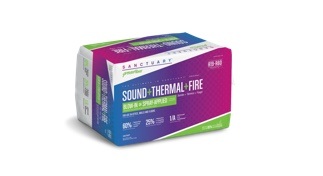
Applegate Cellulose Insulation® provides superior value by being a damp-spray or dry-blown insulation with an R-Value of 3.8 per inch. Applegate Insulation® is blown or sprayed into an attic, ceiling or wall cavity you are able to put the right amount of insulation to achieve the desired R-Value, rather than forcing a pre-formed batt into a restricted, or oddly shaped space. Applegate Insulation® is a custom fit with a lot less fuss and unused material.
Applegate Cellulose Insulation® provides superior fire protection compared to glass, mineral and foam insulations. Foams require a 15 minute fire barrier to give occupants time to escape in the case of a fire, and the fossil fuels used to make most foams (including many so called bio foams) can contribute as a fuel source and result in toxic fumes when ignited.
Applegate premium products consistently meet and exceed the federal fire regulations for fire safety by utilizing both dry and liquid fire retardants to ensure |
|
an insulation which is safe and as low dust as possible.
With Applegate's liquid formulation the fiber and chemical irritant potential is drastically reduced, in fact Applegate premium Insulation's are the industries lowest when it comes to dust. Lower dust also allows installation to be easier, quicker and more efficient then competitors.
Applegate Cellulose Insulation® is in the optimum range of performance vs. price. Pound for pound Applegate Cellulose Insulation® is more effective at reducing energy costs then glass, and while foams may provide a slightly higher R-Value per inch, it comes at an astronomical environmental and economic price, taking years longer to pay for itself.
Adding Applegate Insulation® to an existing building may pay for itself in as little as a year and is environmentally preferred. |
|
Type |
Installation Methods |
R-value per inch (RSI/m) |
Raw Materials |
Pollution From Manufacture |
Indoor Air Quality Impacts |
Comments |
| Cellulose |
Loose-fill, wall-spray (damp), dense pack, stabilized |
3.6-4.0 (21-26) |
Old Newspapers, telephone directories, borates, ammonium sulfate |
Negligible |
Fibers and chemicals can be irritants |
High recycled content and very low embodied energy |
| Fiberglass |
Batts, Loose-fill, semi-rigid board |
3.0-4.0 (15-28) |
Silica sand, limestone, boron, recycled glass, PF resin or acrylic resin |
Formaldehyde emissions and high energy use during manufacture |
Fibers can be irritants |
High embodied energy |
| Mineral Wool |
Loose-fill, batts, semi-rigid or rigid board |
2.8-3.7 (19-26) |
Iron ore blast furnace slag, natural rock, PF binder |
Formaldehyde emissions and high energy use during manufacture |
Fibers can be irritants |
High embodied energy; Rigid board can be an excellent foundation drainage and insulator |
| Cotton |
Batts |
3.0-3.7 (21-26) |
Cotton and polyester mill scraps (especially denim) |
Negligible |
Considered safe |
Two producers, so transportation pollution is higher than other insulation |
| Closed-cell spray polyurethane foams |
Spray-in cavity-fill or spray-on roofing |
5.8-6.8 (40-47) |
Fossil fuels; HFC-24.5fa blowing agent; non-brominated flame retardant |
High energy use during manufacture; global warming potential from HFC blowing agent |
Quite toxic during installation (respirators or supplied air required); allow several days of airing out prior to occupancy |
Very High embodied Energy |
| Open-celled, low-density polyurethane foam (Soy) |
Spray-in cavity-fill |
3.6-3.8 (25-27) |
Fossil fuels and soybeans; water as blowing agent; non-brominated flame retardant |
High energy use during manufacture |
Quite toxic during installation (respirators or supplied air required); allow several days of airing out prior to occupancy |
Very High embodied Energy |
The table above is a Summary of information taken from the January 1, 2005 Environmental Building News which highlights some of the key environmental impacts of selected insulation types.
|
|
Search this Site
|
|

|
One study compared fiberglass and cellulose insulation in attics. Both insulations were installed to manufacturers requirements to achieve an R-19, but fiberglass started to lose its effective R-Value as temperatures dropped to just 32 degrees! It went on to lose up to 50% of its effective R-Value as temperatures continued to drop. Applegate Insulation®, however, not only maintains its R-Value; its insulation effectiveness actually increases as temperatures drop. |
|
Dr. Arthur Furst, one of the world's foremost toxicologists, states, "In essence, the dusts from cellulose insulation materials can be considered as any household dusts. Cellulose, per se, is non-toxic. Biologically, cellulose is innocuous." |
|
|